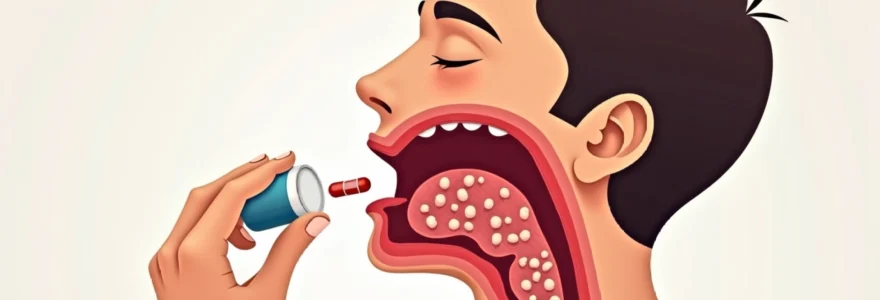
The sensation of a pill lodged in your throat can range from mildly uncomfortable to genuinely alarming, particularly when accompanied by difficulty swallowing or breathing. This common pharmaceutical mishap affects millions of people annually, with studies indicating that approximately 40% of adults have experienced medication entrapment in their oesophageal tract at some point. Understanding the anatomical mechanisms behind pill lodgement and mastering effective removal techniques can transform a potentially distressing situation into a manageable one. The key lies in distinguishing between genuine obstruction requiring immediate intervention and the more common scenario of temporary tablet retention that responds well to conservative measures.
Anatomical understanding of pill lodgement in the oesophageal tract
The human swallowing mechanism involves a complex interplay of muscular contractions and anatomical structures designed to transport substances from the oral cavity to the stomach. When this finely tuned system encounters a pharmaceutical preparation, several factors can contribute to medication entrapment within the oesophageal tract. Understanding these anatomical considerations provides crucial insight into both prevention strategies and removal techniques.
Oesophageal sphincter dysfunction and medication entrapment
The cricopharyngeus muscle, functioning as the upper oesophageal sphincter, represents the most common site for pill lodgement. This ring-like muscular structure acts as a gatekeeper between the pharynx and oesophagus, creating a natural constriction point where tablets frequently become entrapped. When functioning optimally, this sphincter relaxes during the swallowing process, allowing smooth passage of food and medication. However, various factors including age, neurological conditions, or simple muscular tension can impair sphincter function, creating an environment conducive to pharmaceutical obstruction.
Research demonstrates that individuals over 65 experience a 30% higher incidence of pill entrapment due to age-related changes in oesophageal motility and sphincter coordination. The cricopharyngeus muscle’s sensitivity to stress and anxiety can also contribute to dysfunctional swallowing patterns, making some individuals more susceptible to medication lodgement during periods of heightened emotional tension.
Common anatomical sites for tablet obstruction
Beyond the upper oesophageal sphincter, several anatomical landmarks within the oesophageal tract present potential sites for medication entrapment. The aortic arch creates a natural impression on the oesophagus approximately 25 centimetres from the dental margin, whilst the left main bronchus produces a similar constriction point. These anatomical variations create areas of reduced luminal diameter where larger tablets or inadequately lubricated medications may become temporarily lodged.
The lower oesophageal sphincter, situated at the gastro-oesophageal junction, represents another critical point where pharmaceutical preparations may encounter resistance. This muscular valve’s primary function involves preventing gastric acid reflux, but its contractile activity can occasionally impede medication passage, particularly when tablets dissolve partially during transit and lose their structural integrity.
Physiological factors affecting deglutition process
The swallowing process, or deglutition, involves three distinct phases: oral, pharyngeal, and oesophageal. Each phase requires precise muscular coordination and adequate lubrication to facilitate smooth medication passage. Saliva production plays a crucial role in this process, with reduced salivary flow creating an environment where tablets are more likely to adhere to mucosal surfaces rather than glide smoothly toward the stomach.
Xerostomia, or dry mouth condition, affects approximately 10% of the population and significantly increases the risk of pill entrapment. This condition can result from various medications, medical treatments, or underlying health conditions, creating a challenging scenario where the very act of taking medication becomes problematic due to inadequate oral lubrication.
Size and shape variables in pharmaceutical preparations
Modern pharmaceutical manufacturing produces tablets and capsules in diverse sizes, shapes, and surface characteristics, each presenting unique challenges for successful swallowing. Large tablets exceeding 15 millimetres in diameter pose particular difficulties, whilst elongated capsules may orient unfavourably during the swallowing process, increasing lodgement risk. Surface texture also plays a significant role, with coated tablets generally offering smoother passage compared to uncoated preparations with rougher surfaces.
Enteric-coated medications present additional considerations, as these preparations are specifically designed to resist dissolution in acidic environments. When such medications become lodged in the oesophagus, their coating may prevent natural dissolution that might otherwise facilitate passage, potentially prolonging the obstruction and increasing the risk of mucosal irritation.
Immediate assessment techniques for oesophageal foreign body sensation
Rapid and accurate assessment of pill lodgement represents a critical first step in determining appropriate intervention strategies. The sensation of having something stuck in your throat can vary dramatically between individuals and circumstances, making systematic evaluation essential for optimal outcomes. Healthcare professionals emphasise the importance of distinguishing between genuine pharmaceutical obstruction and psychosomatic sensations that may mimic true blockage.
Differentiation between true obstruction and globus pharyngeus
Globus pharyngeus, commonly described as the sensation of a lump in the throat, affects approximately 4% of the population and can easily be mistaken for pill lodgement. This psychosomatic condition typically presents as a persistent feeling of throat fullness without actual physical obstruction. Unlike genuine medication entrapment, globus pharyngeus symptoms often persist for weeks or months and may worsen during periods of stress or anxiety.
True pharmaceutical obstruction typically presents with more acute onset symptoms directly following medication administration. Patients can usually identify the specific moment when the tablet became lodged and often recall the type and size of medication involved. The sensation tends to be more localised and may be accompanied by specific physical discomfort when attempting to swallow saliva or additional fluids.
Clinical signs indicating complete versus partial blockage
Distinguishing between complete and partial oesophageal obstruction requires careful observation of several key clinical indicators. Complete obstruction typically prevents the passage of saliva, leading to drooling and an inability to swallow even small amounts of liquid. Patients may experience immediate and severe discomfort, often describing a sharp, stabbing sensation in the chest or throat area.
Partial obstruction allows for some degree of swallowing function but creates significant discomfort and anxiety. Individuals may be able to swallow liquids with difficulty whilst solid foods prove impossible to manage. The ability to speak clearly usually remains intact with partial obstruction , whereas complete blockage may affect vocal quality due to pressure effects on surrounding structures.
Clinical experience demonstrates that approximately 85% of pharmaceutical obstructions represent partial rather than complete blockage, responding favourably to conservative management techniques when applied promptly and appropriately.
Emergency warning symptoms requiring urgent medical intervention
Certain symptoms accompanying pill lodgement warrant immediate emergency medical attention regardless of the suspected degree of obstruction. Respiratory distress, including difficulty breathing, wheezing, or stridor, suggests potential aspiration or compression of airway structures. These symptoms indicate that the medication may have entered the respiratory tract rather than the oesophageal system, creating a life-threatening situation requiring immediate professional intervention.
Chest pain radiating to the back or shoulders may indicate oesophageal perforation, a rare but serious complication of pharmaceutical obstruction. This condition requires urgent surgical evaluation and management to prevent potentially fatal complications such as mediastinitis or sepsis. Similarly, the presence of blood in saliva or vomit suggests mucosal injury and warrants immediate medical assessment.
Signs of severe distress including profuse sweating, rapid heart rate, or altered mental status should prompt immediate emergency services activation. These symptoms may indicate cardiovascular compromise secondary to severe pain, anxiety, or underlying complications that extend beyond simple pharmaceutical lodgement.
Non-invasive dislodgement methods and swallowing techniques
Conservative management approaches for pill lodgement focus on utilising physiological mechanisms to encourage natural tablet passage whilst minimising the risk of complications. These techniques leverage gravity, muscular contractions, and mechanical displacement to resolve pharmaceutical obstruction without requiring invasive medical intervention. Success rates for non-invasive methods approach 90% when applied appropriately to suitable cases of partial obstruction.
Valsalva manoeuvre application for oesophageal clearance
The Valsalva manoeuvre involves creating increased intrathoracic pressure through forced expiration against a closed glottis, effectively increasing pressure within the oesophageal tract. This technique can help dislodge medications by creating a pressure differential that encourages tablet movement toward the stomach. To perform this manoeuvre safely, individuals should take a deep breath, close the mouth and nostrils, and attempt to exhale forcefully for 10-15 seconds.
Caution must be exercised when employing the Valsalva manoeuvre, particularly in individuals with cardiovascular conditions or elevated blood pressure. The significant pressure changes associated with this technique can affect venous return and cardiac output, potentially creating complications in vulnerable populations. Healthcare providers recommend limiting attempts to 2-3 repetitions with adequate rest periods to prevent adverse effects whilst maximising therapeutic benefit.
Sequential liquid bolus administration protocol
Systematic liquid administration represents one of the most effective conservative approaches for pharmaceutical dislodgement. This technique involves consuming measured amounts of room-temperature water in a specific sequence designed to create optimal conditions for tablet passage. The protocol begins with small sips to assess swallowing tolerance, progressing to larger volumes as comfort allows.
The optimal approach involves initially consuming 30-50 millilitres of water, followed by a brief waiting period to allow gravitational effects. If the obstruction persists, additional 100-150 millilitre boluses should be consumed at 5-minute intervals, maintaining an upright posture throughout the process. This systematic approach prevents fluid overload whilst providing adequate hydraulic pressure to facilitate tablet movement.
- Begin with small test sips of room-temperature water to assess swallowing capacity
- Progress to 50ml measured doses if initial swallowing proves comfortable
- Wait 2-3 minutes between doses to allow gravitational assistance
- Increase volume to 100-150ml if smaller amounts prove ineffective
- Maintain upright posture throughout the entire process
Carbonated beverage method for tablet dissolution
Carbonated beverages offer a unique approach to pharmaceutical dislodgement through their dual mechanisms of action. The carbon dioxide gas creates mild pressure effects within the oesophageal tract, whilst the acidic pH of most carbonated drinks can accelerate tablet dissolution for certain medication types. This combination of mechanical and chemical effects often proves more effective than water alone for stubborn obstructions.
Research indicates that cola-based beverages demonstrate particular efficacy in pharmaceutical dislodgement, with success rates approaching 75% in cases where water alone proves ineffective. The phosphoric acid content in these beverages contributes to tablet breakdown whilst the carbonation provides gentle pressure assistance. However, this method should be avoided with enteric-coated medications that are specifically designed to resist acidic dissolution.
Bread bolus technique for mechanical displacement
The bread bolus technique utilises soft, moist bread to create gentle mechanical pressure that can push lodged medications toward the stomach. This method involves chewing a small piece of fresh bread until it forms a cohesive, well-moistened mass, then swallowing it with the intention of physically displacing the entrapped tablet. The soft texture reduces the risk of additional obstruction whilst providing sufficient bulk to create effective pressure.
Optimal bread selection involves choosing fresh, soft varieties without seeds, nuts, or tough crusts that might create additional lodgement risks. White bread or soft wholemeal varieties work most effectively, whilst dense or crusty breads should be avoided. The bread should be chewed thoroughly until it reaches a porridge-like consistency before attempting to swallow, ensuring it can conform to the oesophageal contours without creating additional obstruction.
Pharmacological considerations and Medication-Specific protocols
Different pharmaceutical preparations present unique challenges and considerations when lodgement occurs within the oesophageal tract. Understanding these medication-specific factors enables more targeted and effective management approaches whilst minimising potential complications associated with drug-oesophageal interactions. Certain medications pose particular risks when retained in contact with oesophageal mucosa, necessitating more urgent removal strategies.
Medications with high irritancy potential include bisphosphonates, potassium supplements, and certain antibiotics such as doxycycline and clindamycin. These preparations can cause significant mucosal damage when retained in prolonged contact with oesophageal tissues, leading to ulceration, stricture formation, or perforation in severe cases. Recognition of these high-risk medications should prompt more aggressive management approaches and earlier consideration of professional intervention.
Extended-release formulations present additional complexity due to their designed resistance to dissolution and their potential for continued drug release even when lodged inappropriately. These medications should never be crushed or broken in attempts to facilitate passage, as this destroys their controlled-release properties and may result in dangerous drug overdose. Alternative liquid formulations or immediate-release preparations may be necessary for individuals with recurrent lodgement issues.
Pharmaceutical research demonstrates that certain tablet coatings can begin causing oesophageal irritation within 15-30 minutes of contact, emphasising the importance of prompt intervention for high-risk medications.
Time-sensitive medications such as cardiac glycosides, anticoagulants, or seizure medications require special consideration when lodgement occurs. Delays in drug absorption due to oesophageal retention may result in subtherapeutic blood levels and potential clinical consequences. Healthcare providers may need to adjust dosing schedules or provide alternative administration routes to maintain therapeutic efficacy during resolution of the obstruction.
| Medication Category | Risk Level | Time to Intervention |
|---|---|---|
| Bisphosphonates | High | Immediate |
| Potassium Supplements | High | Within 30 minutes |
| Tetracyclines | Moderate | Within 1 hour |
| Standard Analgesics | Low | Within 2 hours |
Medical intervention strategies and professional treatment options
When conservative management approaches prove ineffective or when high-risk medications are involved, professional medical intervention becomes necessary to prevent complications and ensure optimal patient outcomes. Healthcare facilities employ various diagnostic and therapeutic modalities to address pharmaceutical obstruction, ranging from simple visualisation techniques to advanced endoscopic procedures. The selection of appropriate intervention strategies depends on multiple factors including obstruction duration, medication type, and patient-specific risk factors.
Upper endoscopy represents the gold standard for both diagnosis and treatment of pharmaceutical obstruction. This procedure allows direct visualisation of the oesophageal tract whilst providing therapeutic capabilities through specialised instruments. Endoscopic removal techniques include grasping forceps for intact tablets, suction devices for fragmented medications, and irrigation systems for dissolved pharmaceutical residues. Success rates for endoscopic intervention exceed 95% whilst maintaining excellent safety profiles when performed by experienced practitioners.
Radiographic imaging may be employed to localise radio-opaque medications or to assess for complications such as oesophageal perforation. Contrast studies using dilute barium solutions can outline the oesophageal contours and identify areas of narrowing or obstruction. However, contrast administration should be avoided when perforation is suspected, as barium extravasation can create severe mediastinal inflammation requiring surgical intervention.
Advanced cases may require surgical consultation, particularly when endoscopic approaches prove unsuccessful or when complications such as perforation occur. Minimally invasive thoracoscopic techniques have largely replaced open surgical approaches for most oesophageal emergencies, reducing patient morbidity whilst maintaining excellent therapeutic outcomes. However, surgical intervention remains reserved for complex cases where conservative and endoscopic approaches have failed or proven contraindicated.
Healthcare utilisation data indicates that approximately 12,000 emergency department visits annually in the United Kingdom involve pharmaceutical obstruction, with the majority resolving through conservative management or simple endoscopic intervention.
Prevention strategies following successful removal focus on identifying and addressing underlying risk factors that contributed to the initial lodgement episode. This may involve medication review to identify alternative formulations, swallowing assessment by speech and language therapists, or treatment of underlying conditions such as gastroesophageal reflux disease that may predispose to pharmaceutical obstruction. Patient
education programmes can significantly reduce recurrence rates, with studies demonstrating up to 60% reduction in repeat episodes when patients receive proper counselling on medication administration techniques.
Multidisciplinary care teams involving pharmacists, speech therapists, and gastroenterologists provide comprehensive assessment and management strategies for individuals with recurrent pharmaceutical obstruction. These specialists can collaborate to identify optimal medication formulations, assess swallowing function, and address underlying anatomical or physiological factors contributing to repeated lodgement episodes. Such collaborative approaches have shown remarkable success in preventing future incidents whilst ensuring continued therapeutic compliance.
Long-term follow-up protocols may include periodic swallowing assessments, particularly for elderly patients or those with neurological conditions affecting deglutition function. Early identification of deteriorating swallowing capacity allows for proactive intervention strategies, including medication reformulation or alternative delivery methods, before serious obstruction episodes occur. Healthcare providers emphasise that prevention remains far superior to treatment when addressing pharmaceutical lodgement concerns.
Research indicates that structured patient education programmes reduce pharmaceutical obstruction recurrence by 60% when combined with appropriate medication reformulation strategies, highlighting the importance of comprehensive post-incident care planning.
Emergency preparedness planning forms an essential component of ongoing management for individuals with history of pharmaceutical obstruction. Patients should understand when to seek immediate medical attention, possess contact information for relevant healthcare providers, and maintain awareness of their personal risk factors. This proactive approach ensures rapid intervention when conservative measures prove inadequate, potentially preventing serious complications associated with prolonged medication retention.
Healthcare facilities continue developing innovative approaches to pharmaceutical obstruction management, including specialised swallowing clinics and advanced endoscopic techniques. These developments promise improved outcomes for patients experiencing recurrent or complex medication lodgement issues, whilst reducing healthcare costs associated with emergency interventions. The integration of telemedicine platforms also enables remote consultation and guidance for patients experiencing pharmaceutical obstruction in community settings, improving access to specialist advice when geographical barriers exist.
The evolution of pharmaceutical obstruction management reflects broader advances in patient-centred care, emphasising prevention, education, and multidisciplinary collaboration to achieve optimal therapeutic outcomes whilst minimising intervention-related risks and complications.
Future directions in pharmaceutical obstruction management focus on developing predictive models to identify high-risk individuals before initial episodes occur. These approaches utilise patient demographics, medication profiles, and swallowing assessment data to stratify risk and implement preventive strategies. Such proactive methodologies represent the next frontier in pharmaceutical safety, potentially eliminating many obstruction episodes through targeted intervention before problems develop.